
Here’s the uncomfortable truth about outreach: most emails get deleted, and it’s not because editors are rude. It’s because the email gave them nothing to say yes to.
The emails that get replies are short, specific, and make the editor’s job easy. That’s it. No magic subject line, no secret tool. We run outreach every single week for SaaS and iGaming brands, and the difference between a campaign that lands links and one that burns a list is almost always in the email itself.
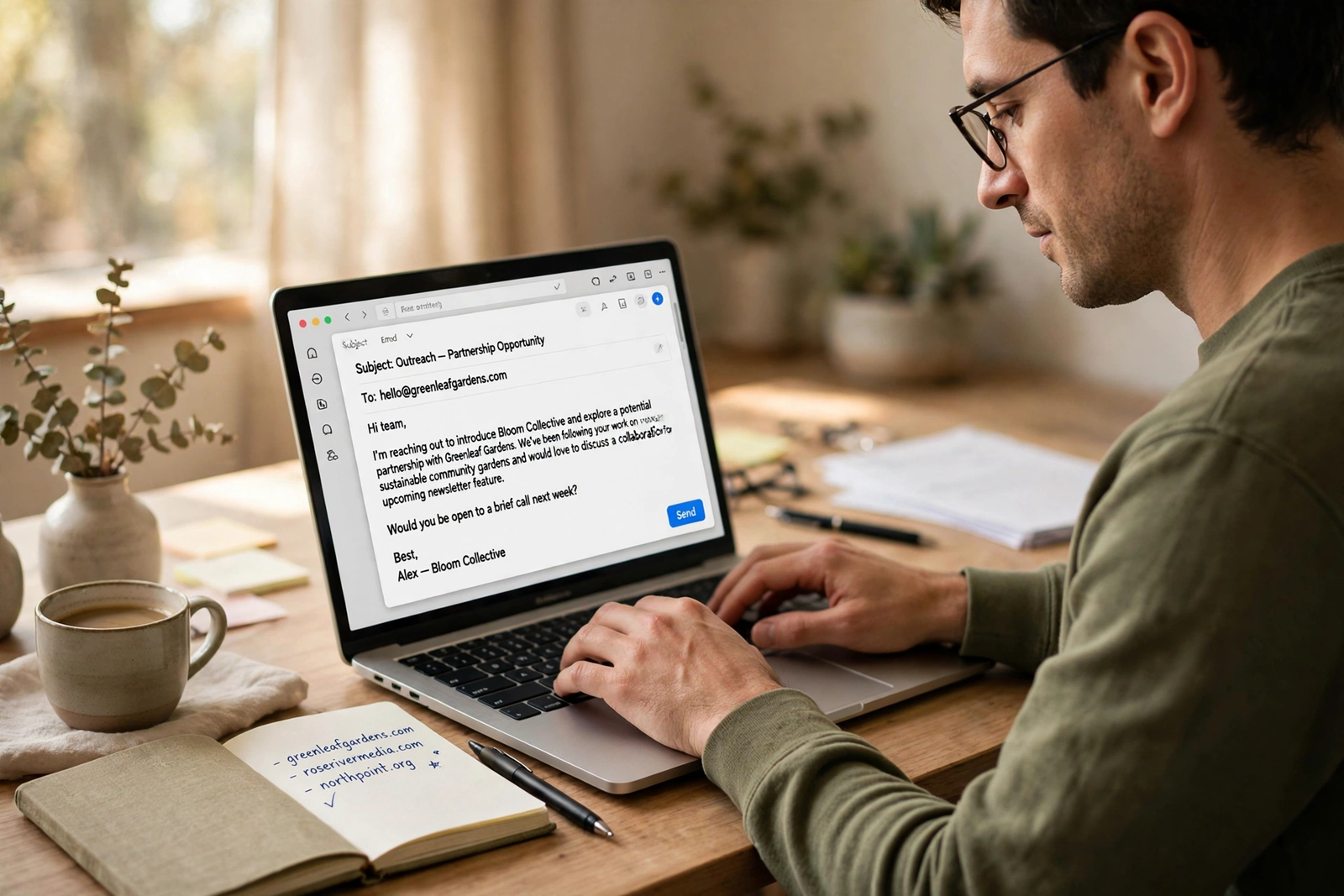
Why most outreach emails get deleted
Read your own inbox and you’ll see the pattern. The deleted ones all look the same:
- “Dear Webmaster.” If you don’t know the person’s name or the site’s name, you haven’t done the work yet.
- Fake flattery. “I loved your recent article” — when the site hasn’t published in six months. Editors spot this instantly, and it kills your credibility before the pitch starts.
- A wall of text. Five paragraphs about your client’s company before you ever say what you’re offering.
- The wrong site. Pitching a casino link to a parenting blog because a tool said its DR was 62. Relevance beats metrics, every time.
If your email could be sent to a thousand sites without changing a word, it’s not outreach. It’s spam with better formatting.
The anatomy of an email that gets a reply
Every email we send that works follows the same four-part shape:
- One line that proves you know the site. Not a compliment — a fact. “Your guide to live dealer casinos is the most complete one I’ve seen on the topic.” That took two minutes of reading, and the editor can tell.
- One sentence on what you’re offering. A guest post, a data point, a resource — named clearly. No mystery, no “I have an exciting opportunity”.
- Why it fits their audience. One line connecting your topic to their readers. If you can’t write this line, the site is wrong for you.
- An easy close. A question they can answer with one word. “Would a piece on [topic] be useful for your readers?” beats “Let me know your thoughts at your earliest convenience” by a mile.
Total length: under 120 words. Editors read email on their phones between other work. Respect that.
Subject lines that worked for us
Nobody can promise you a subject line that “always gets opened”. But here’s what we’ve actually seen work, and why:
- “Guest post idea for [Site Name]” — Boring, but honest. The editor knows exactly what this is before opening, and the ones who accept guest posts open it.
- “Quick question about your [Topic] page” — Works best for resource-page and broken-link outreach, because it sounds like feedback, not a pitch.
- “Data on [topic] your readers might like” — Only use this if you actually have data. Editors remember who wasted their time.
The pattern: specificity beats cleverness. A subject line with the site’s name and a real topic outperforms a “clever” one every week in our campaigns.
Two templates you can steal
Template 1: Guest post pitch
Subject: Guest post idea for [Site Name]
Hi [Name],
I read your [specific article] — the section on [specific detail] is stronger than most coverage of [topic] I’ve seen.
I write about [topic] and wondered if a piece on [your proposed title] would be useful for your readers. It would cover [one-line outline], and I’d be happy to match your site’s style and length.
Would that be of interest?
Thanks,
[Your name]
Template 2: Resource suggestion
Subject: Quick question about your [Topic] page
Hi [Name],
I was reading your [resource/guide] page and noticed you link to [old/broken resource] — it [no longer exists / hasn’t been updated since 2021].
We recently published [your resource] on [topic], which covers [what’s new]. Would it be worth adding as a replacement?
Either way, thanks for the page — it’s a genuinely useful one.
[Your name]
Notice what both templates do: they give the editor something specific, they ask one question, and they make “yes” easy.
Follow-ups: where most of the links actually come from
Here is the part most people skip, and it’s where we earn most of our links. In our campaigns, the first follow-up — sent 4–5 days after the original email — produces nearly as many replies as the first email itself. Editors are busy; your first email often just got buried.
Our rhythm:
- Day 0: The pitch.
- Day 4–5: One-line follow-up. “Just floating this back up — would the [topic] piece be useful?” Nothing more.
- Day 10–12: A final short note, sometimes with a different angle or title.
- After that: Stop. Three emails with no reply is a no. A fourth email turns a future “yes” into a block.
Polite persistence is professional. Endless chasing is not.
What not to do
A short list, learned the hard way:
- Don’t lie about reading their content. One wrong detail and you’re done with that editor forever.
- Don’t send the same email to everyone on a list. Tools make this easy. Editors can tell, and site owners talk to each other.
- Don’t pitch a link and call it a “collaboration”. Everyone knows what it is. Honesty gets more replies than euphemisms.
- Don’t attach files to a first email. Nobody opens attachments from strangers.
The real secret (there isn’t one)
Good outreach is just respect, packaged well. Know the site, keep it short, offer something real, follow up twice, and move on gracefully when it’s a no. Do that consistently — week after week, not in one frantic burst — and the replies compound. That’s how a small agency like ours keeps a full pipeline of placements without buying a single link from a marketplace.
If you want the longer version of how we think about buying links properly, read our guide on what separates a good guest posting service from a link seller. And if your niche is gambling, our iGaming link building guide covers the outreach angles that actually work there.
What’s the worst outreach email you’ve ever received? We’ve all got one — drop it in the comments.
About the author: Junaid Ashraf is the Founder & CEO of JD SEO Agency. He has published 50+ guest articles for agency orders in the US and runs manual outreach campaigns for SaaS and iGaming brands.
Further reading: if you want to go deeper on outreach emails, Ahrefs’ guide to link building is a solid primer on the fundamentals behind the tactics above. Most outreach emails fail for the same few reasons — vague subject lines, no proof you read the site, and no clear ask. Fix those three things and your outreach emails will already stand out from most of what lands in an editor’s inbox, because good outreach emails are specific, short, and easy to say yes to — which is exactly what the best outreach emails have in common. Keep that standard for every batch of outreach emails you send, and the replies tend to follow.