
Broken link building is simple: you find a dead link on a relevant page, then offer the site owner a working piece of content to replace it with. The owner fixes a real problem on their page, and you earn an editorial link. That trade — help first, link second — is why this tactic still works when so much outreach gets ignored. We have used it alongside our weekly guest posting campaigns, and it has one of the highest reply rates of anything we send, because the email is about their site, not ours.
How Broken Link Building Actually Works
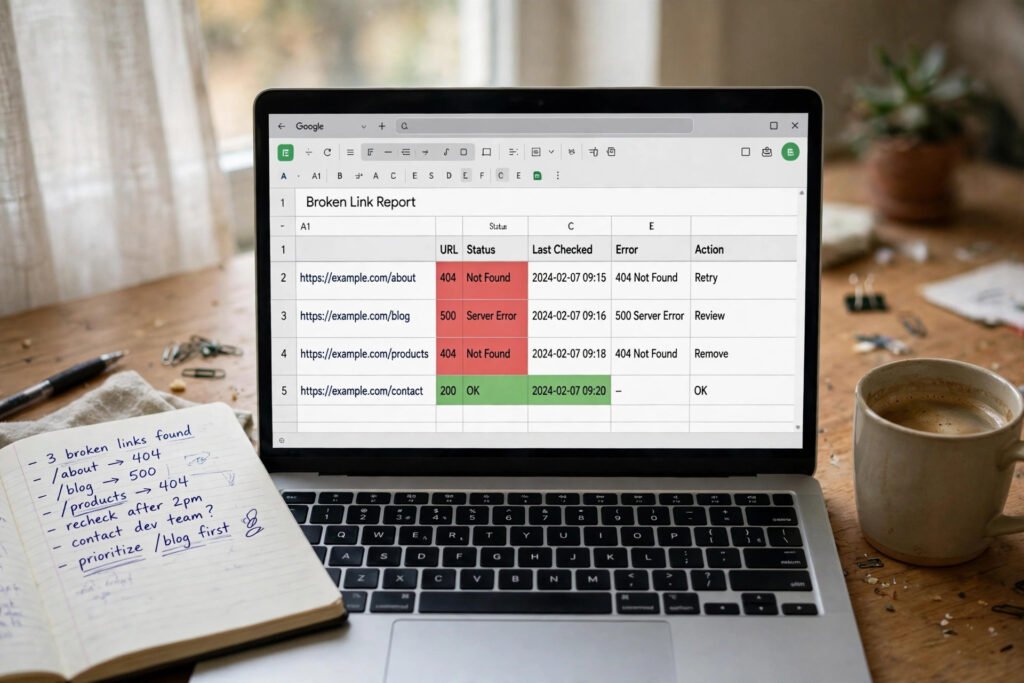
The web rots. Sites redesign, pages get deleted, domains expire — and the links pointing at them quietly die. Every dead link is a small embarrassment for the site owner: a reader clicks, lands on a 404, and trusts that page a little less. Google’s crawlers hit those dead ends too.
Broken link building turns that rot into an opening, in three steps:
- Find a dead link on a page that matters in your niche.
- Build or pick a live piece of content that genuinely replaces what the dead link used to point to.
- Tell the site owner about the dead link, and offer your replacement as the fix.
That is the whole tactic. No tricks, no mass blasts. The reason it converts better than a cold guest post pitch is that you are not asking for a favour — you are handing someone a fix for a problem on their own site.
Finding Broken Links at Scale
Start where links gather: resource pages, “best tools” lists, roundups, and older blog posts that link out heavily. University, library, and association resource pages are gold for this, because they were built years ago and nobody maintains them. A page with fifty outbound links usually has at least one dead one.
For tools, use what fits your budget:
- Check My Links (a free browser extension) highlights dead links on any single page in seconds. Good for quick checks while you browse.
- Screaming Frog SEO Spider crawls a whole site and lets you filter for 404 responses. That is how you check a resource page properly instead of clicking every link by hand.
- Ahrefs has a broken outgoing links report, which is the fastest way to scan many sites at once once you are doing this at volume.
- Google search operators cost nothing: try your niche plus words like “resources”, “useful links”, or “recommended reading” to surface link-heavy pages worth checking.
Then filter hard, because most dead links are not worth chasing. We only pursue a target when the linking page is topically relevant to us, still indexed, and gets some real traffic of its own. A dead link on a dead page helps no one, even if you win the placement.
Here is the practitioner-only insight most guides skip: before we ever write the pitch, we look the dead URL up in the Wayback Machine to see what it used to be. Most people pitch their homepage or their newest post and hope. The replacement that actually converts is the one that covers the same specific topic the dead link covered — and when we say in the email “your link used to point to a guide on X”, the site owner knows wedid the work. That one line is the difference between a reply and silence.
Building a Replacement Worth Linking To
Your replacement has to genuinely replace the dead resource: same topic, same depth or better, live, and ungated. If the dead link pointed to a beginner’s guide on keyword research, your replacement should be a beginner’s guide on keyword research — not your services page, not a thin post that mentions the topic once.
If you do not have matching content, write it. A short, focused guide that answers the dead page’s question beats a long generic post every time. We have written single-purpose guides just to win one placement, and they often go on earning links from other writers later, because the gap they fill is real.
Be honest with yourself at this step. If the dead link pointed to something you cannot match — a dataset, a tool, a study — skip that target. A bad replacement burns the relationship with that site owner, and a site owner who feels pitched will not answer your next email either. We run every candidate replacement through the same checks as any other placement: indexed, relevant, and on a page with real standing. Our own backlink quality checklist runs through those checks in full, and it applies word for word here.
The Email That Converts
Keep it short, specific, and about their site. This structure is the one that gets us replies:
Subject: Quick heads-up: broken link on [page topic]
Hi [Name],
I was reading your [page title] page and noticed your link to [dead site/page] no longer works — it lands on a 404.
That link used to point to a guide on [topic]. We recently published [our guide] covering the same ground, in case it is useful as a replacement: [URL].
Either way, thought you would want to know about the dead link.
Best,
[Your name]
Why this works: it names the exact broken link, it shows you know what the link used to be, it offers one replacement instead of a menu, and it ends without pressure. The owner can fix their page in two minutes, and saying yes costs them nothing.
Two habits matter as much as the template. First, re-check the link is still broken on the day you send — nothing kills credibility faster than reporting a link the owner already fixed. Second, follow our normal reply pattern: most replies come within 48 hours or never, so we follow up once after four or five days and then move on. We wrote up our full approach to subject lines and follow-up timing in our outreach emails guide, and the same rules apply here.
Mistakes That Kill Broken Link Campaigns
| Mistake | What actually happens |
|---|---|
| Pitching every dead link you find | Low relevance, burned domains, and a reputation as a spammer |
| Generic templates with only the domain swapped | Site owners spot them instantly and ignore them |
| Skipping the Wayback check | Your replacement does not match, so there is no reason to say yes |
| Pitching ten broken links at once | Looks automated, even when it is not |
| Chasing past one follow-up | An annoyed webmaster who will never link to you |
| Ignoring the linking page’s health | A placement on a dead resource page helps no one |
One more honest note: replacement links are normal editorial links, and their value depends on the linking page — its traffic, its relevance, and whether Google indexes it. That is true for every link you build, and it is why the filtering step matters more than the email step. A link earned by fixing a real problem is still a link Google expects to be editorial, so keep it that way: no payment, no reciprocal-link deals dressed up as replacements. Google’s own spam policies draw that line clearly.
Where Broken Link Building Fits
Treat it as one lane in your link strategy, not the whole road. It pairs well with guest posting: guest posts get you links this week, broken link placements come from a different inbox — the site owner’s maintenance instinct rather than their editorial calendar. Some of our best placements came from sites that never answer guest post pitches but replied within a day to a broken link email.
It has a real limit, though. Your niche only has so many broken links on relevant pages, and you cannot build an entire profile on this tactic alone. Use it steadily — a few qualified targets a week — and let it compound with your other outreach instead of replacing it.
Frequently Asked Questions
Does broken link building still work in 2026?
Yes, because dead links keep appearing as sites redesign and old pages disappear. What stopped working is the mass-blast version: templated emails sent to thousands of sites with no checking. A checked, specific, single-link email still gets answered.
Do I need paid tools to start?
No. Check My Links, Google search operators, and the Wayback Machine are free and enough to run your first campaign. Paid tools like Ahrefs or Screaming Frog save time once you are checking sites at volume, but they are not a requirement.
What if I do not have replacement content?
Write a focused piece that matches the dead page, or skip that target. Never pitch an unrelated page and hope the owner does not notice — they will, and you lose that site for good.
How many emails should I send?
Small, qualified lists beat blasts — 20 to 30 targets you have actually checked will outperform 500 scraped ones, because personalisation is the whole tactic. One broken link per email, one replacement, one follow-up.
Do replacement links pass value?
They are normal editorial links, so their value follows the same rules as any link: it depends on the linking page’s traffic, relevance, and indexing, not on how you earned it. That is why we check the page before we pitch, not after.
So — what is the oldest resource page in your niche, and how many dead links do you think are sitting on it right now? Go check one page today, and tell us in the comments what you found. We read every one.
About the author: Junaid Ashraf, Founder & CEO, JD SEO Agency, doing manual link building and outreach for SaaS and iGaming brands.